Deep Cleaning
How Often to Deep Clean a Bali Villa
29 September 2026 · 6 min read

Ask around and one person says twice a year, another says quarterly. Neither answer means enough without context.
How often a Bali villa needs a deep clean depends on how it is used and the season. Where it sits changes what the deep clean focuses on. In this article, we break down what we recommend for each, so you can set your villa's schedule. The short version lives in our help centre, in how often to deep clean in Bali.
Start with how the villa is used
Rented short-term. Guest turnover sets the pace. Between-guest cleans keep a villa presentable, but they are turnover work rather than deep cleans. We recommend quarterly for rented villas above 80% occupancy, and twice a year below that. The owners and villa managers who book quarterly keep their villas in the most pristine condition we see.
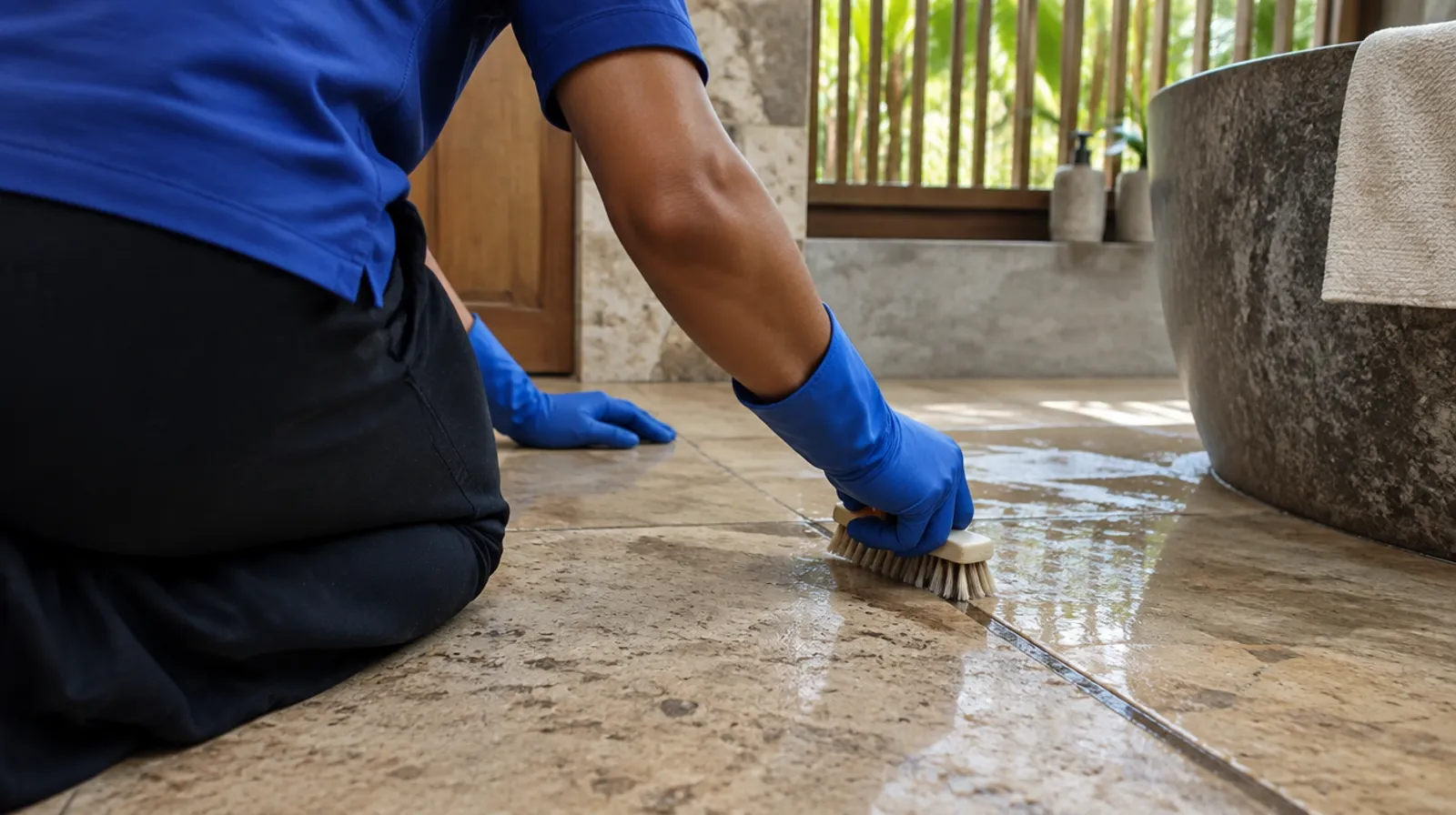
Lived in. We tend to leave a longer gap between deep cleans here. A villa someone lives in usually sees less wear than a rented one. That is the common pattern, though there are exceptions. Look at the grout, and at the fabric on your sofa. Those tell you when a deep clean is due. As a rule of thumb, plan on around twice a year. Regular cleaning in between keeps it neat.
Empty. An empty villa still needs deep cleans. When nothing is aired or moved, a closed-up villa may deteriorate faster than an occupied one. As a rule of thumb, plan on one before and one after the wet season. Full scope is on the villa deep cleaning page.
The wet season changes how often to deep clean
Bali's rains run November to March. The damage comes from the humidity more than the rain itself.
As the wet season goes on, damp builds up indoors and the villa starts to smell musty. Curtains hold moisture, and cushions hold it for longer. Grout darkens, and mould grows in damp areas like the shower. We see this most in villas on the Uluwatu cliffside and around the Canggu beach area.
We recommend planning around two moments in the year. The first is before the wet season, so the villa goes into it clean. The second is straight after it.
The post-monsoon clean matters most. The mould that grew through the wet months is still there in April. A villa that gets reset then holds its condition through the dry season with much less effort. Do not skip it, because mould grows in places you do not see. It smells until it is cleaned out.
Where the villa sits changes the work
Coastal villas in Canggu, Seseh and Bingin are exposed to salt air and sand. Metal fittings age faster, outdoor furniture greys, and fine sand collects in every track and threshold.
Inland villas, including those in Ubud, deal with damp and plant growth instead. You get green film on paving and moss on stone.
Our service areas run from the coast through to Ubud. Here is how the same deep clean differs in two of them.
A clifftop villa near Uluwatu. The inside holds up well, and the outside is where the work is. Salt wind off the cliff dulls the glass and hazes the metal fittings. It greys the outdoor furniture within weeks of a clean. We quote outdoor areas by size and window panes per window, so include both in your quote request.
A villa a street back from the beach in Canggu. In the wet season, water comes off the road and into the ground floor. It leaves silt in the grout and damp in the skirting, which a mop does not remove. The smell returns as soon as the room warms up.
Signs it is overdue
The shower screen and the bathroom mirrors have gone cloudy and will not wipe clear. In our experience, owners and villa managers notice this one first, and many mistake it for old glass. Bali's water is lime-heavy, so every shower leaves a thin mineral film. It builds until the glass looks permanently fogged. The taps and shower heads scale up at the same rate. Descaling as part of a deep clean is what removes it.
Grout that no longer responds to a normal clean is another sign. So is a smell that comes back after airing. You may also see cleanliness mentioned in a guest review. Book a deep clean before it reaches that point.
Booking around the seasons
Two booking periods fill up first. One is September and October, before the rains. The other is April and May, straight after them. Many owners and villa managers want the same few weeks. At Easy Day Clean, we recommend booking early to hold your date, often one to two weeks ahead.
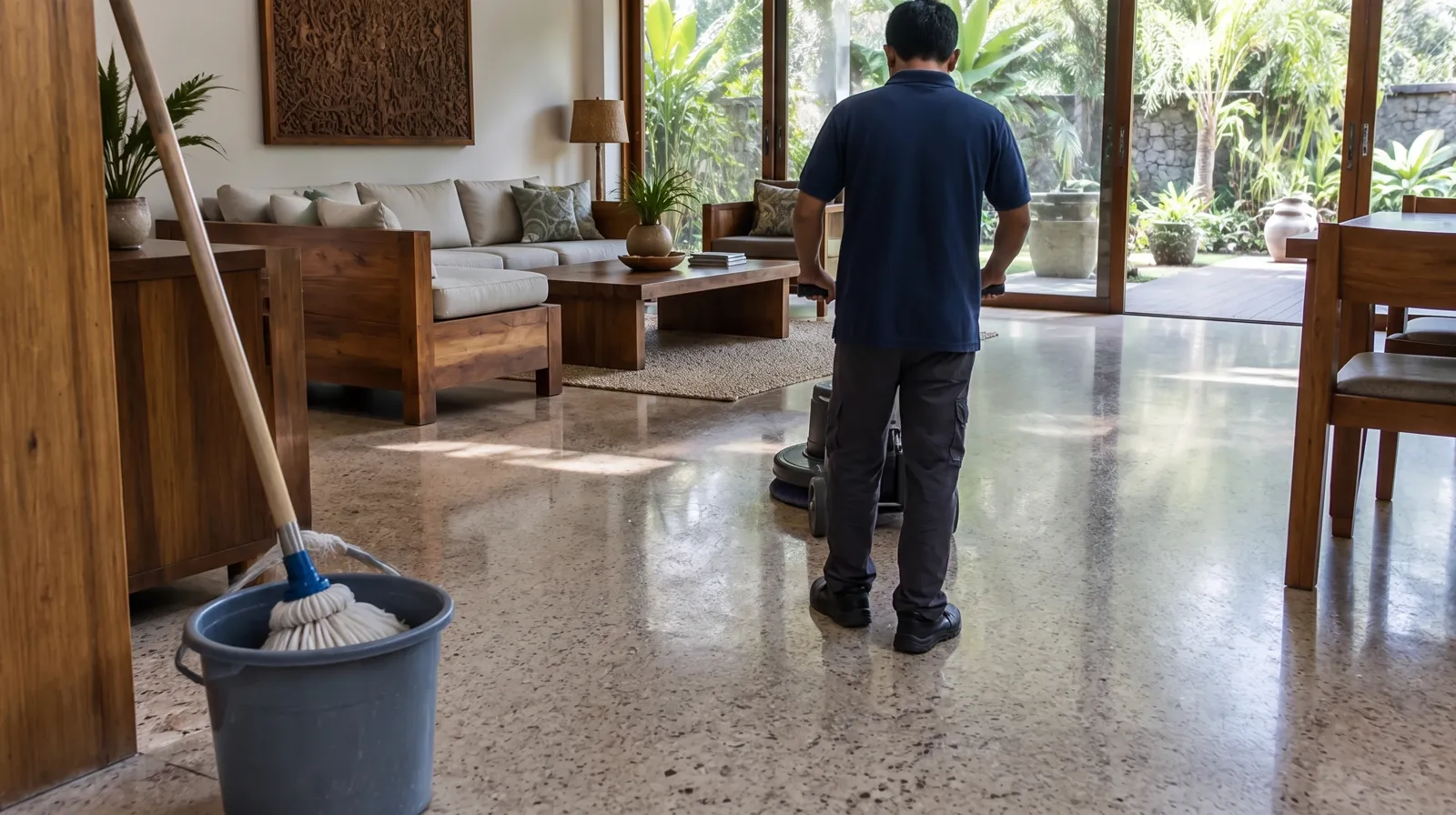
If you rent the villa out, plan for a clear day. A deep clean takes four hours to a full day, depending on the size of the villa. The villa needs to be empty between a checkout and the next check-in. It does not fit into a same-day turnover. Our help centre covers how far ahead to book. You can request a quote with your preferred dates attached.